Elbridge Gerry Spaulding (1809-1897), lawyer, financier, Congressman, “Father of the Greenback” and confidant of President Lincoln, developed a 350+ acre farm and summer estate at the southern end of Grand Island in the 1870s. Overlooking a broad lawn sloping down to the river, he built a large wooden stick style summerhouse. He called the estate “Riverlawn.”
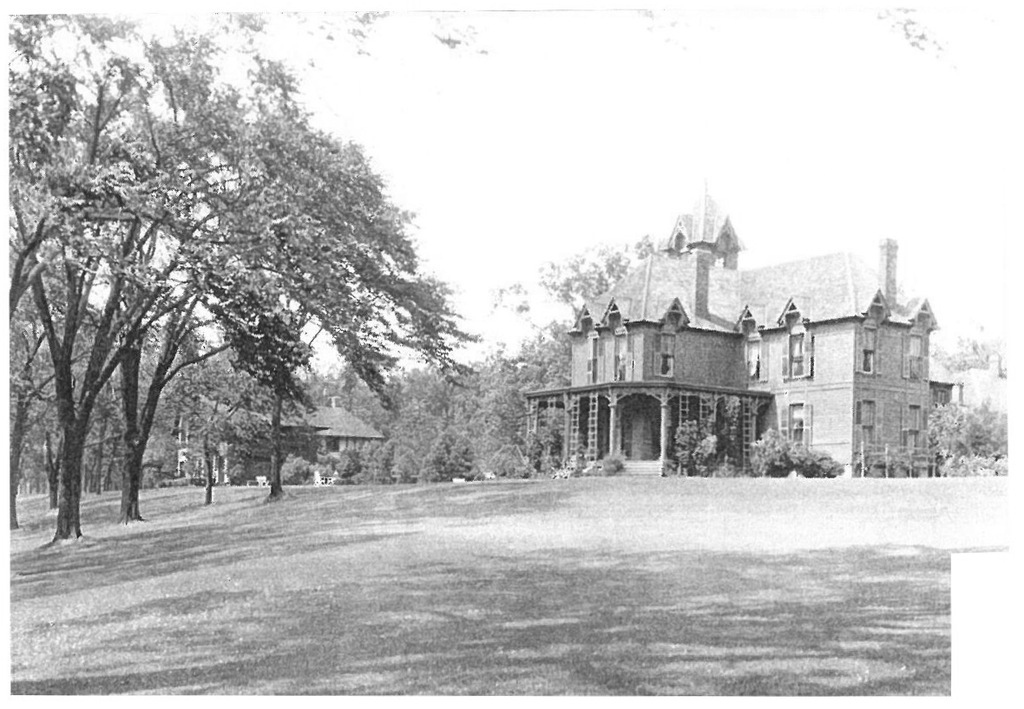
The cruciform-plan two-story house had a three-story tower in the rear, overlooking the estate. In 1935, when the house became part of a New York State Park, it and several related farm buildings were demolished.
1903 Photo
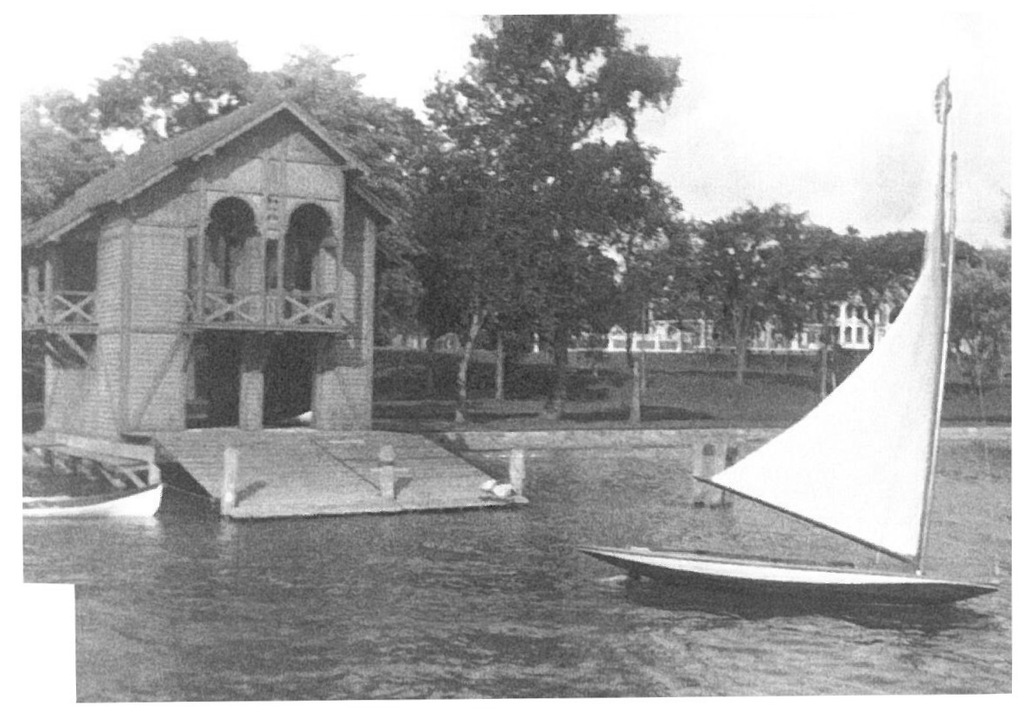
An ornamental stick style boathouse built in the late 1870s was originally located at the shore in front of E.G. Spaulding’s house. The only access to the estate was by watercraft. The boathouse was relocated further down river in 1935. Thanks to the efforts of Bill Koch, the Spaulding boathouse was listed on the National Register in 1998.
1903 Photo
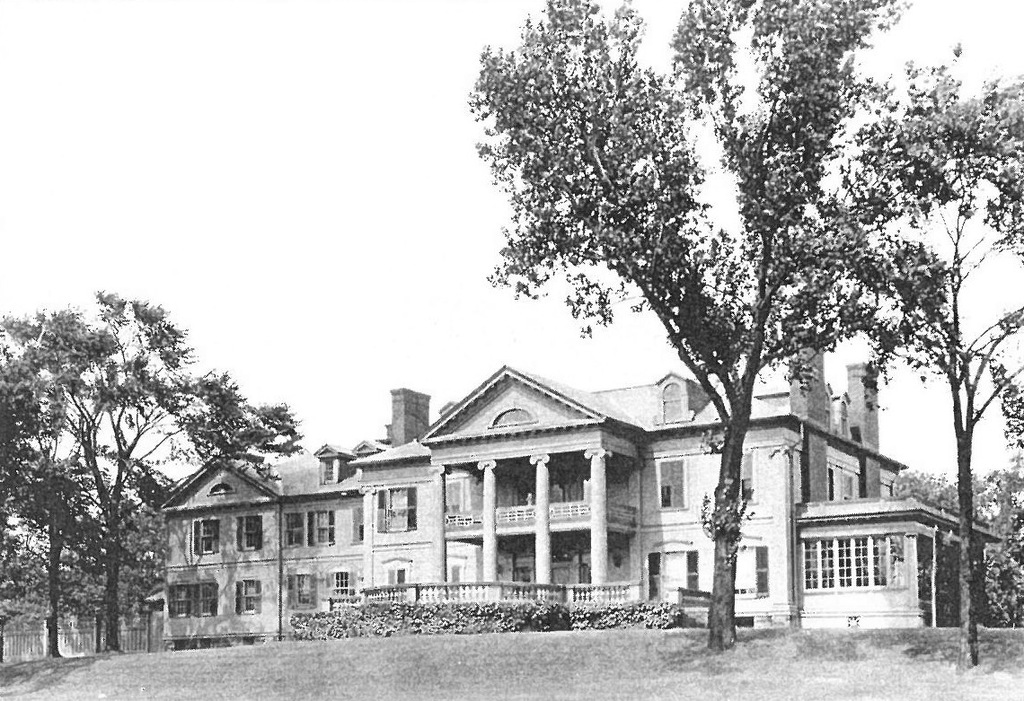
The most elaborate of the Riverlawn houses was the Georgian Revival mansion home of Charlotte Spaulding and her husband Frank Sidway. The mansion designed by architects Lansing & Beirl was built in 1899. Charlotte was a daughter of E.G. Spaulding. A grand ionic columned portico and a balustraded semi-circular terrace faced the river.
1903 Photo
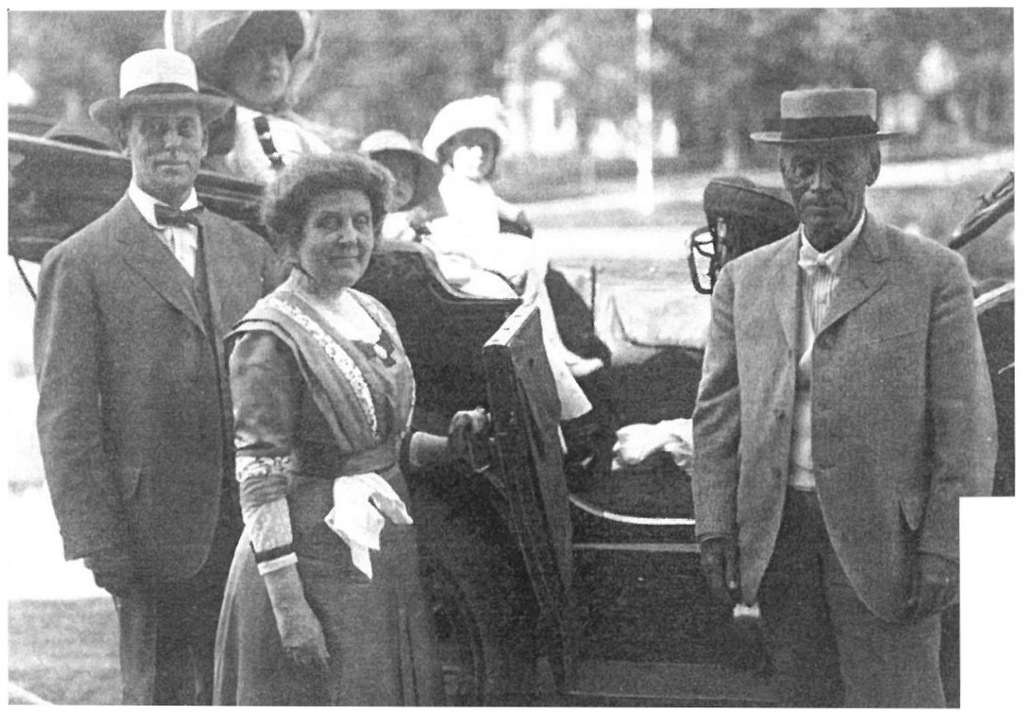
Family photo of Charlotte Spaulding Sidway, left, and her husband Frank, right. Standing behind her is their son Frank. Frank’s wide Amelia Roberts Sidway is in the car with their children Margaret and Martha. The late Martha Sidway Adams provided all these photos to Bill Koch.
1910 Photo
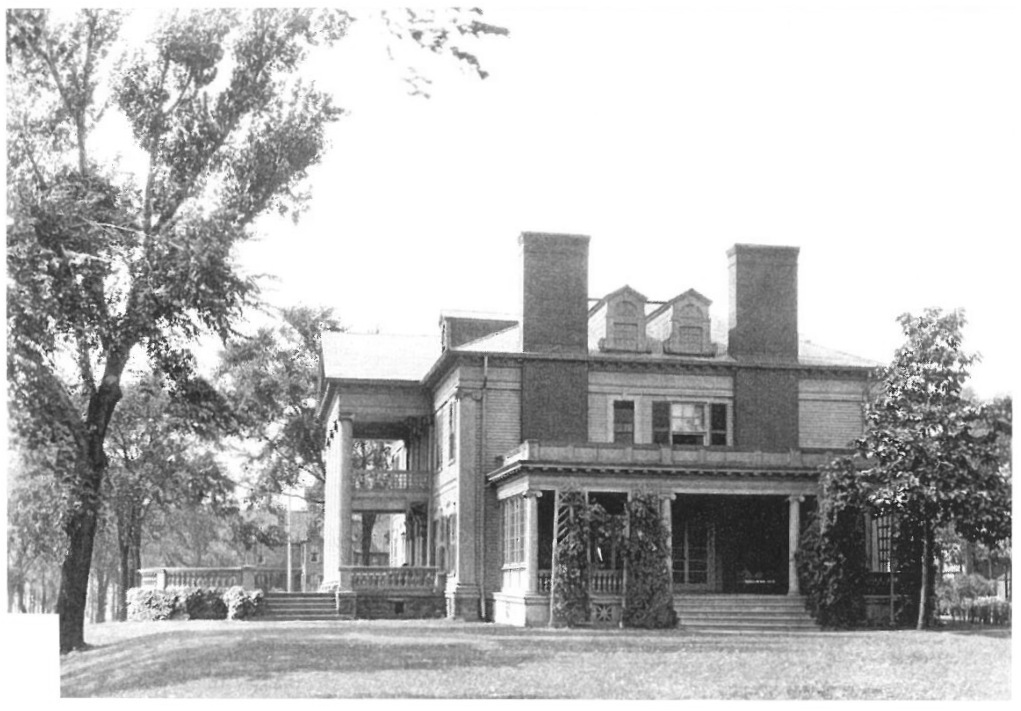
In this side view of the Spaulding Sidway House, one can see the E.G. Spaulding house through the portico. When E.G. died in 1897, he left his estate in equal shares to his children. Charlotte bought out the shares of her siblings to be the sole owner of the 350-acre Riverlawn.
1903 Photo
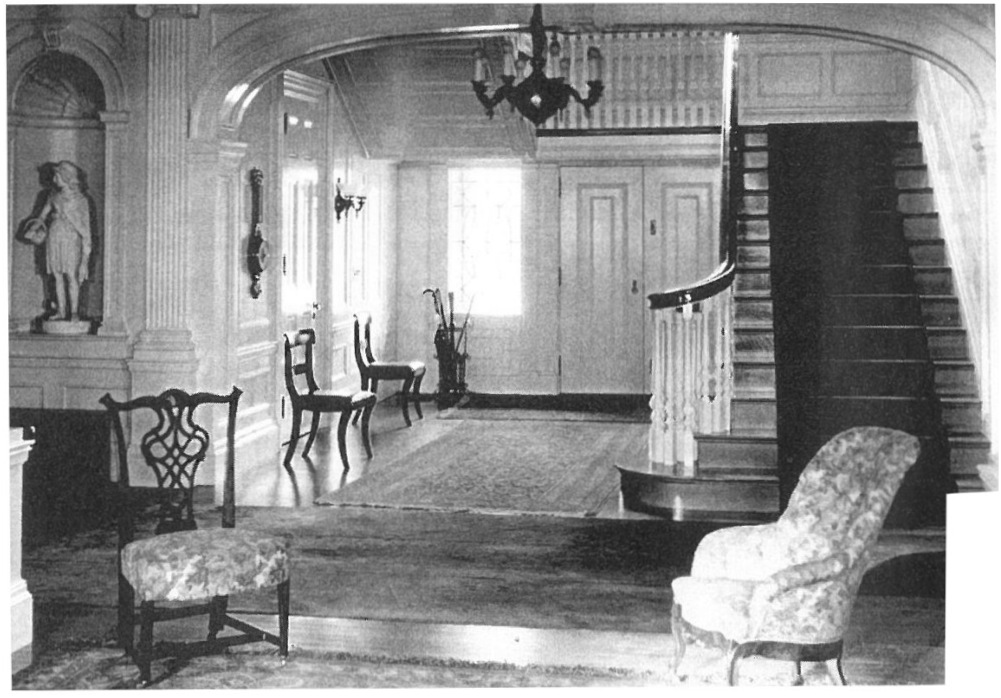
Interior view of the entrance and stair hall of the Georgian mansion displays the elaborate classical woodwork.
1934 Photo
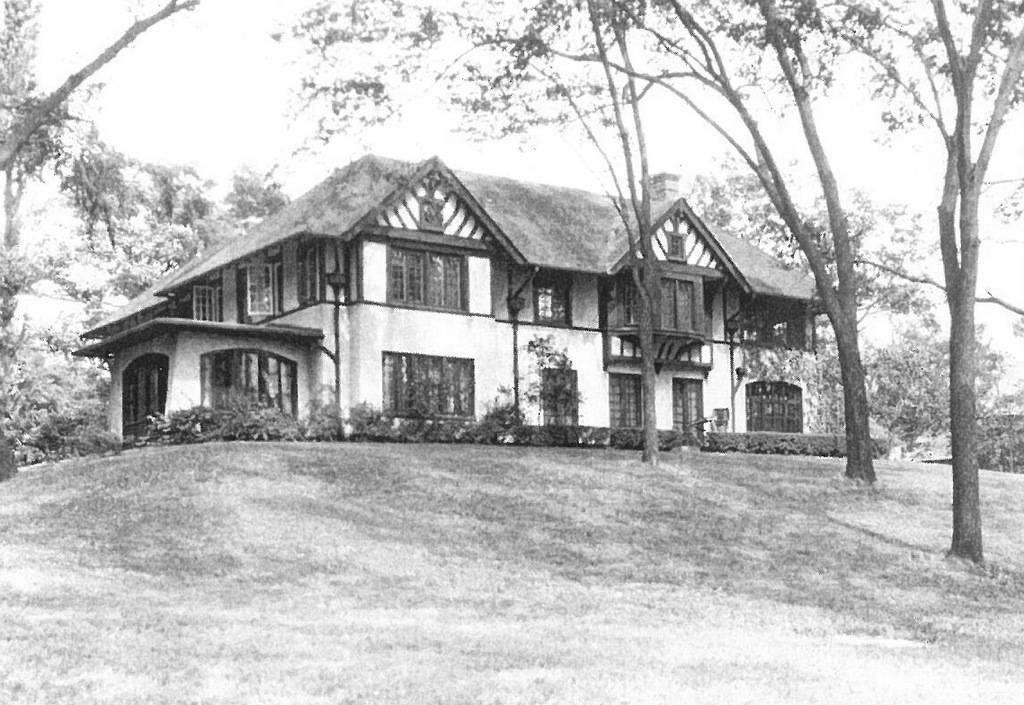
Charlotte died in 1934. New York State acquired Riverlawn in 1935 to become part of Beaver Island State Park. All of the houses were demolished for the development of the park in 1935 except the Tudor Revival house shown here. Built in 1911, and designed by the firm of Lansing, Bley & Lyman, it was the summer home of Charlotte’s son Ralph Sidway.
1934 Photo